Are compatible replacement lenses actually worth it? Fair question — and one we would rather answer honestly than loudly. The truthful answer depends on the state of your frames, what you expect from the swap and how the pair earns its keep. This is the guide we would give a friend: where compatible lenses shine, where they cannot help, and exactly what to check before you spend a penny.
The cost case
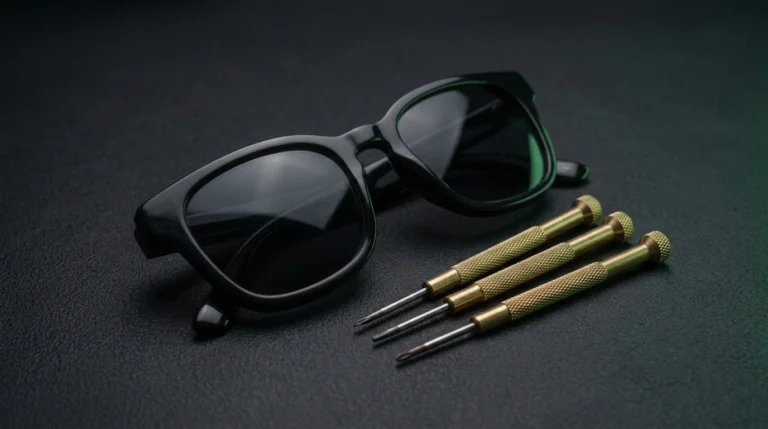
Frames and lenses age at completely different speeds. A well-made frame — acetate, metal or sports nylon — can last a decade or more; the lenses in front of it take every scratch, every drop, every coating-eating wipe with a shirt hem. When the lenses go, you are left holding a frame that still fits perfectly, hinges that still work and a shape you already know suits your face — attached to two pieces of scratched plastic. Replacing just the lenses costs a fraction of replacing the pair, keeps a frame that is already moulded to your head, and keeps a perfectly good object out of landfill. The better the frame was, the stronger that logic gets: reviving is at its most compelling exactly where discarding hurts most.
What “compatible” really means

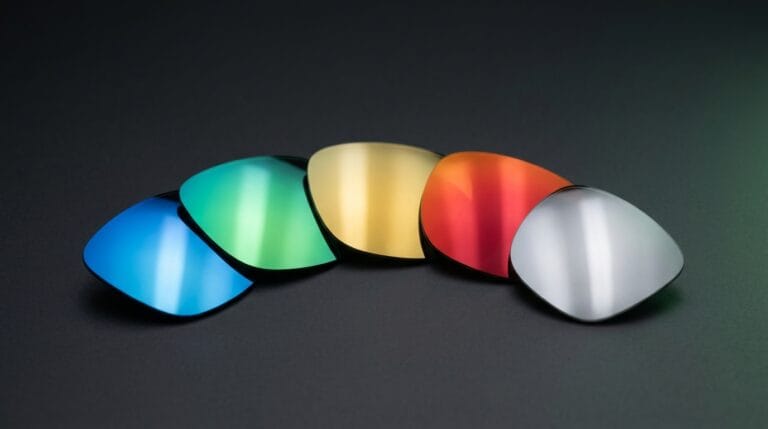
Compatible lenses are independently manufactured to match the lens shape, base curve and size of a specific frame model — ours are precision cut per model and caliber across our Ray-Ban-compatible and Oakley-compatible ranges. To be plain about it: SunglassRevivers lenses are not products of Ray-Ban®, Oakley® or any frame brand, whose names appear here only as compatibility references. What you should expect from a good compatible lens: an exact fit for the listed model and size, full UV400 protection, clear optics and a real choice of tints and finishes. What no honest seller will offer: brand etching or logos on the lens. A compatible lens is a functional part, not a badge — if a listing promises the badge, walk away.
Are they safe? The UV400 question
Safety is the one place where scepticism is entirely healthy, so let’s be direct. UV protection comes from the lens material and its treatment, not from the price tag or the name on the frame. A lens rated UV400 blocks ultraviolet light up to 400 nanometres — and a dark lens without UV filtering is worse than no sunglasses at all, because it relaxes your pupils wider while letting UV straight through. Every lens we cut carries full UV400 protection, in every one of our 15+ colours, mirrored or plain. Polarization itself is a comfort-and-clarity choice rather than a safety one; our guide to polarized vs non-polarized replacement lenses walks through when each option wins.
When new lenses are the wrong call
- A cracked or warped frame front. The lens groove is what grips a new lens; if the front is cracked through or heat-warped, no lens will seat securely. Spend your money on new frames, not new lenses.
- A chewed-up lens groove or kinked metal rim. Old damage from prying tools or a bad bend can leave the channel unable to hold a clean seat line — and a lens that pops out on its own is worse than a scratched one.
- A frame that never fit you. New lenses revive optics, not ergonomics. If the pair always pinched or slid down your nose, fresh lenses will not change that.
- A snapped temple arm is not on this list. Arms are replaceable parts — our compatible replacement temple arms fit with one screw, so a broken arm plus worn lenses is still a revival, not a funeral.
What to check before ordering

- Find your model number. It is printed inside the temple arm, and it decides everything about fit. Our guide to finding your sunglasses model number decodes it in thirty seconds.
- Confirm the lens size. Many models come in several calibers, and the width in millimetres must match exactly — it is the first number after the model code.
- Inspect the frame honestly. Flex it gently, check the groove or rim for damage, and look for cracks around the hinges. A sound frame is the whole premise of the repair.
- Choose polarized or non-polarized. Hours of driving and water favour polarized; heavy screen use favours non-polarized.
- Pick your tint and finish. Colour and mirror are style-and-comfort choices — UV safety is identical across all of them.
- Read the warranty and returns terms. A seller confident in its cut will put that confidence in writing before you pay.
The honest verdict
If the frame is sound and the lenses are tired, compatible replacement lenses are one of the easiest wins in your wardrobe: a fraction of the cost of a new pair, ten minutes of home fitting, and frames you love back in rotation. If the frame itself is broken, be honest with yourself and let it go. When you are ready, browse the full compatible replacement lens range — 15+ colours, polarized and non-polarized, precision cut with full UV400 protection — with free worldwide shipping, a 3-year warranty against manufacturing defects and 14-day returns on every order. Don’t replace them. Revive them.